Beginner Ceramics · How-to
Hand Care for Potters: Creams and a Routine for Class Nights
5 min read
Short answer
How do you keep your hands from drying out when you do pottery?
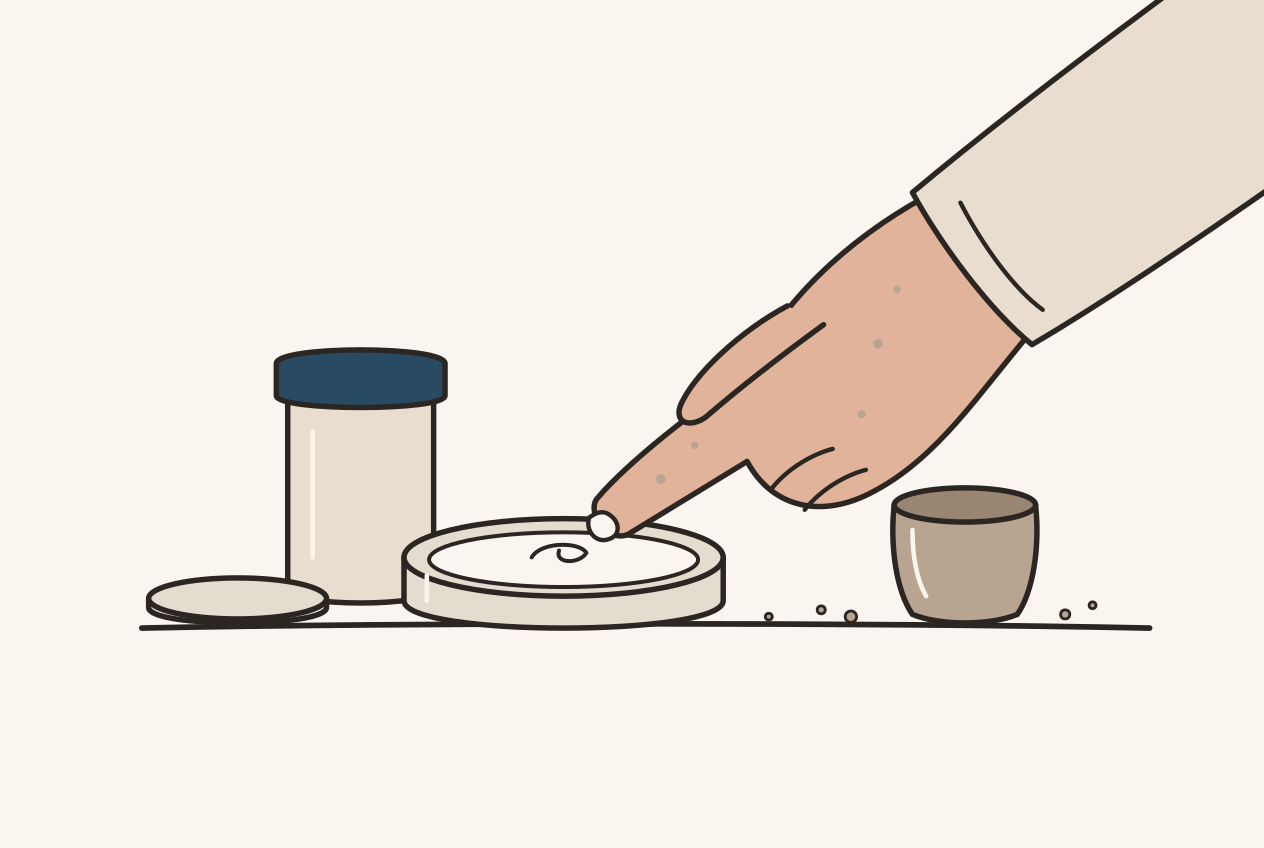
Clay and throwing water pull moisture and oil out of your skin, and all the washing afterward makes it worse. Wash with warm water, not hot, and dry your hands well. Then put a thick cream or ointment on (we use Vaseline and Bag Balm) while your skin is still slightly damp, and again at night. Look for petrolatum or mineral oil to seal moisture in, and glycerin to draw it in. A “barrier cream” is no substitute for gloves. See a doctor if cracks won’t heal or look infected.
Dry, rough hands come with the hobby. For us, the hours after class are the worst: our skin feels super chalky, sometimes crackly, and now and then itchy. Below are the creams we actually keep in our bags, then what dermatology sources recommend, and one tip that’s worth repeating: warm water, not hot.
What we use
Vaseline. Our everyday pick. Plain petroleum jelly is exactly the kind of sealing ingredient the American Academy of Dermatology (AAD) recommends, and it’s inexpensive. It is greasy, so it suits after class and bedtime better than the minutes before you handle clay.
Bag Balm. The green tin from Vermont, made since 1899. The maker describes it as lanolin-enriched, and it’s thick and stays put. We keep a tin alongside the Vaseline.
On our list to try
Udderly Smooth. We’ve just ordered this one, so we’ll update this page once we’ve used it for a few weeks. The maker calls the original cream non-greasy and also sells Extra Care versions with 10% and 20% urea.
Aquaphor Healing Ointment. Recommended to us by other potters. It’s 41% petrolatum and fragrance-free, per the maker.
Other creams worth a look
We haven’t tried these yet. The descriptions are the makers’ own. Check the label before you buy, because formulas change.
| Cream | What the maker says | Link |
|---|---|---|
| O’Keeffe’s Working Hands | A concentrated cream for extremely dry, cracked hands. | — |
| Flexitol Heel Balm | A 25% urea balm made for cracked heels. | — |
| Gloves In A Bottle | An “invisible barrier” lotion. A lotion doesn’t replace gloves; see barrier creams below. | — |
Why clay dries out your hands
Clay is made to soak up water, and you spend a class with your hands in it, wet and drying over and over. Then there’s the washing at the end, sometimes several rounds of it to get the clay out from around your nails. The AAD notes that cleansers can strip the skin’s natural oils, and warns that severely dry skin can crack, which can lead to infections.
A simple class routine

Before class
- If your studio allows it, rub in a little cream so your skin isn’t starting dry. Ask first, since some studios don’t want lotion near the wheel or the clay.
- Keep your nails short. They’re easier to clean and less likely to catch on the clay.
During class
- Take short breaks to rinse and dry your hands rather than working in wet clay for hours without a stop.
- If you wear gloves, take them off now and then. The UK Health and Safety Executive (HSE) says to take regular glove breaks.
After class
- Wash with warm water, not hot. Hot water feels harsher, and if your hands are already cracked it stings and irritates them further. The AAD’s dry-skin advice also calls for warm water, not hot, in the bath or shower. Use a mild cleanser, then pat your hands completely dry.
- Moisturize straight away, while your skin is still slightly damp. The AAD says to apply moisturizer after every hand wash.
- At bedtime, for rough hands, the AAD suggests a cream or ointment under cotton gloves, left on overnight.
What to look for on the label
The AAD groups the helpful ingredients by what they do:
- Occlusives form an oily layer that keeps water in: petrolatum (petroleum jelly) and mineral oil.
- Humectants draw water into the skin: glycerin and hyaluronic acid.
- Lipids such as ceramides support the skin’s barrier.
Its dry-skin list also includes lanolin, shea butter, dimethicone, jojoba oil and lactic acid.
Choose a cream or an ointment over a thin lotion. The AAD calls them more effective than lotions and prefers tubes to pump bottles. It also recommends fragrance-free products, because “unscented” can still mean added chemicals that bother dry skin. If a product irritates your skin, stop and mention it to your doctor.
Barrier creams versus moisturizers
Some products are sold as “barrier creams” or “invisible gloves.” The HSE, which writes UK workplace skin guidance, is blunt: there are no true barrier creams, and they don’t replace gloves. It says pre-work creams can play a small part in a skin care routine, for example by making dirt easier to wash off, and that regular moisturizing is what keeps skin supple.
For clay work, that means a cream before class can make cleanup easier and keep your hands from starting dry. The cream you put on afterward does the real work.
Gloves
The AAD recommends gloves whenever your hands are often in water. Some potters throw or handbuild in thin, snug gloves, though you lose some feel for the clay. Gloves are also handy for cleanup. If you wear them for long, take breaks (HSE).
A small gift for a potter
A tin of hand cream is an easy stocking stuffer for anyone who throws or handbuilds. Pair it with a nail brush, or a pair of cotton gloves for overnight use. Shopping for a beginner? Our beginner tools guide and what we’ve bought so far have more ideas, and our first pottery class guide covers what to bring.
When to see a doctor
Moisturizing fixes ordinary dry hands. See a doctor or dermatologist if:
- cracks don’t heal, or keep splitting and bleeding
- you see signs of infection, such as pus, crusting, spreading redness or increasing pain
- your skin becomes itchy, blistered or rashy. We get some itching after class too; itching that lingers, or comes with a rash or blisters, is worth getting checked
- dryness continues even after following the tips above (AAD)
Stop any product that burns or seems to make things worse, and mention it to your doctor. This page is general information from two beginners, not medical advice.
Sources (9)
: American Academy of Dermatology, Health and Safety Executive (UK), O'Keeffe's and more
- Dermatologists' top tips for relieving dry skin — American Academy of Dermatology. Tips list. Supports: Recommends warm water, ointments and creams over lotions, fragrance-free over unscented products, gloves when hands go in water, and seeing a board-certified dermatologist if dry skin continues. Lists jojoba oil, dimethicone, glycerin, hyaluronic acid, lactic acid, lanolin, mineral oil, petrolatum and shea butter as ingredients to look for.
- Skin care tips for hands — American Academy of Dermatology. Skin care basics. Supports: Says cleansers and sanitizers can strip the skin's natural oils, that severely dry skin can crack and lead to infections, to moisturize after every wash while the skin is still damp, that tube products work better than thin pump lotions, lists ceramides, humectants (glycerin, hyaluronic acid) and occlusives (mineral oil, petrolatum), and suggests cream under cotton gloves overnight.
- Skin at Work: Frequently asked questions — Health and Safety Executive (UK). Barrier creams and gloves. Supports: Says there are no true barrier creams and they do not replace gloves, that pre-work creams can play a limited role, such as helping remove dirt during washing, that regular moisturising helps prevent dermatitis and keeps skin hydrated and supple, and to take regular glove breaks.
- Working Hands — O'Keeffe's. Maker home page. Supports: The maker describes Working Hands as a concentrated hand cream for extremely dry, cracked hands.
- Bag Balm — Bag Balm. Maker home page. Supports: The maker describes Bag Balm as lanolin-enriched and made in Vermont since 1899.
- Udderly Smooth — Udderly Smooth. Maker home page. Supports: Shows the product range, including the Original cream and Extra Care creams with 10% and 20% urea, and the maker's non-greasy claim.
- Aquaphor Healing Ointment — Aquaphor (Beiersdorf). Product page. Supports: Lists 41% petrolatum as the active ingredient, fragrance-free, for dry, cracked skin.
- Flexitol Heel Balm — Flexitol (LaCorium Health). Product page. Supports: Lists 25% urea and directions for use on feet.
- Gloves In A Bottle — Gloves In A Bottle. Maker home page. Supports: The maker describes the lotion as an invisible barrier for the skin.