Beginner Ceramics · How-to
Your First Pottery Class: A Few Things Worth Asking
3 min read
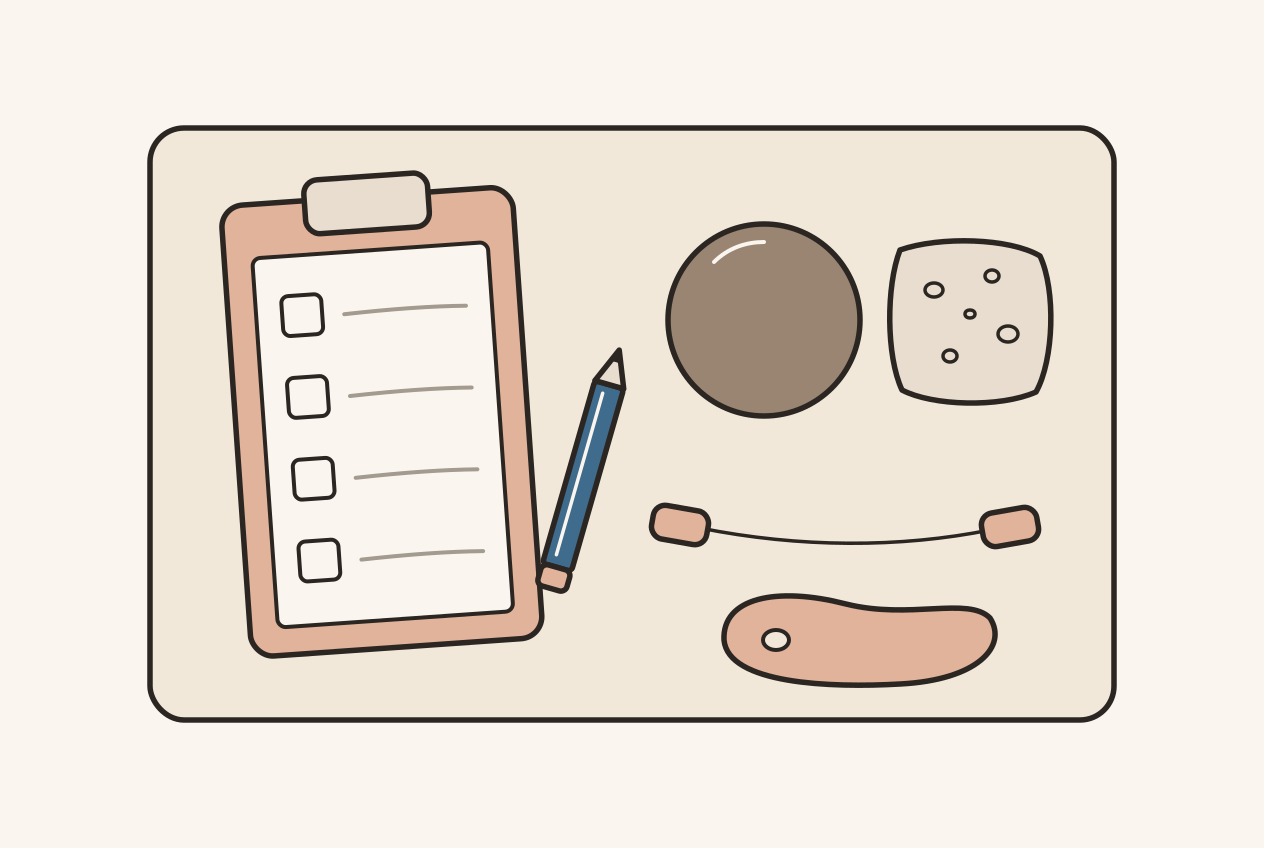
We came to ceramics at different times, but it has become something we can share. If you are thinking about joining a class, this is a simple place to start: a few questions to ask before buying supplies or packing a bag.
We have gathered these notes from the source below. They are a starting point for a conversation with your studio, not a claim that every class works like ours.
Short answer
What should I bring, wear, and ask?
Ask the studio before you buy anything or wear something you care about. Studios set the clay, the tools, the clothing rules, and the firing, so their answers beat any packing list. Until you hear back, plan on separate work clothes that do not trap dust, as Princeton’s ceramics safety page recommends, and leave the shopping for later.
A first class is a visit to someone else’s workshop. The instructor already chose a clay body, a firing arrangement, and a cleanup routine. Getting familiar with that routine is a good first-day goal.
Start with your studio
Clothing, tools, and clay are easy to buy too early. Some studios include clay and a basic tool kit in the fee, and some may not allow outside clay in their kiln. Until you have asked, treat every purchase as optional.

Ask what the class fee includes
Clay, firing, tools, and storage are separate questions. If firing costs extra, only the studio can tell you how much. Ask, too, when finished pieces are ready to take home.
Ask what to wear
Get the studio’s rule on shoes, sleeves, jewelry, and hair. Write it on the checklist. Do not assume every studio shares one dress code.
Plan on clothes you can wash separately
Princeton’s ceramics page tells people who work with clay to keep separate work clothes that do not trap dust, and to wash them separately. That is an occupational-health precaution, not a fashion rule, and your studio may add requirements.
Ask who to call before risky tasks
Sanding dry clay, mixing powdered glaze, and opening a kiln are not first-day experiments. Ask who supervises them.
Write the clay’s name
If the studio issues a clay, record the name the same day. Knowing which clay you used makes later shrinkage and crack notes much more useful. The log page shows the fields.
A checklist you can print
The download is a list of questions with blank answer lines. It does not tell the studio what the answers should be.
Download the class checklist One page: eight questions for your studio, including cleanup and missed sessions, with a line under each for the answer.
Easy first-class mistakes
- Buying a wheel, a kiln, or a large tool kit before the first class. The tools guide separates what can wait.
- Wearing clothes you don’t want stained, then finding the studio has no spare shirt.
- Bringing your own clay for a shared kiln without asking first.
- Treating a blog’s packing list as the studio’s rule.
Where this page stops
Ask your studio how it handles dust, glaze chemistry, and kiln work; that belongs in its orientation, not on this page. For background reading, Princeton’s environmental health and safety office has a ceramics page, listed in the sources below.
Next, read what to buy and what can wait. If the class asks you to bring a sponge, our sponge guide shows how to cut one from a hardware-store car sponge. Start a clay log on the first day you touch the studio’s clay.
What we are taking from this
Ask a few practical questions, then leave room to enjoy being new.
Sources (1)
: Princeton University Office of Environmental Health and Safety
- Ceramics — Princeton University Office of Environmental Health and Safety. Clay hazards and precautions, and the lead-leaching section. Supports: Separate work clothes that do not trap dust, wet cleanup of clay scraps, and avoiding dry sanding of greenware are occupational precautions. A lead-safe label is not the same as a lead-free material, and craft studios do not automatically match industrial leaching tests.